
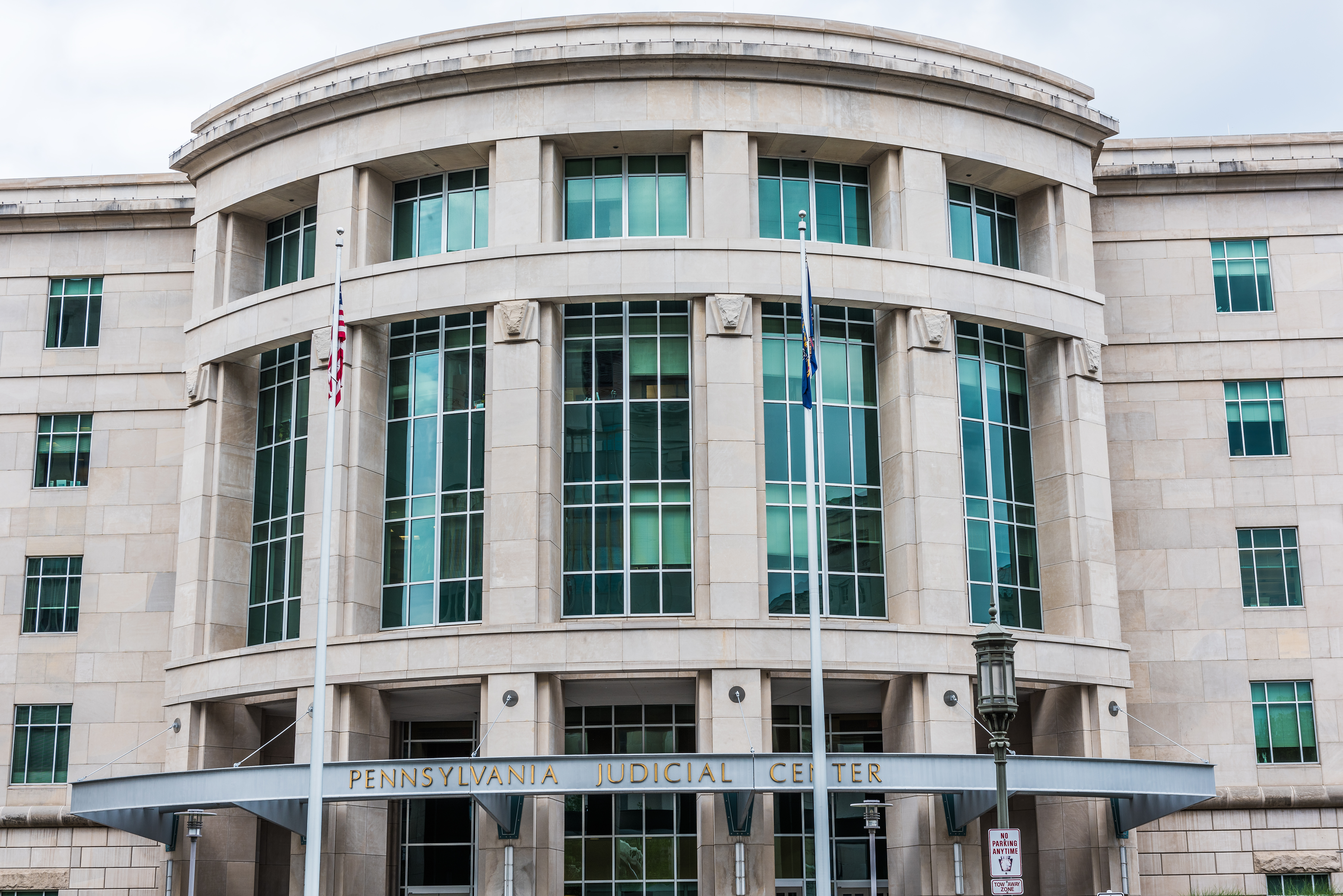
In November, the Supreme Court of Pennsylvania heard oral arguments in the appeals of the following workers’ compensation law questions related to pharmaceuticals:
- Federated Insurance Company v. Summit Pharmacy (Bureau of Workers' Compensation Fee Review Hearing Office), disputes the Pennsylvania Bureau of Workers’ Compensation’s use of Redbook as its source for average wholesale price (AWP) in pharmaceutical fee disputes
- 700 Pharmacy v. Bureau of Workers' Compensation Fee Review Hearing Office (State Workers' Insurance Fund), questions whether pharmaceutical goods and services are included in the state workers’ compensation law’s anti-self-referral provision.
Federated Insurance Company v. Summit Pharmacy
For background on the Federated case: The state workers’ compensation statute requires reimbursement for drugs to be limited to 110% of the AWP, but it does not define AWP or identify an AWP publication source. For years, the Bureau of Workers’ Compensation has published notice that it uses Redbook as its AWP publication source in fee disputes. A 2024 appeals court (Commonwealth Court) decision rejected the Bureau’s longstanding identification and use of Redbook and directed the Bureau to adopt a new AWP publication source. To date, the Bureau has not determined an alternative source that it believes meets the appeals court’s criteria and does not jeopardize access to prescription medications for injured workers. Given this, Bureau processing of pharmaceutical fee disputes has also been placed on hold.
On November 19, counsel for both parties argued before justices the legal, plain language, and “term of art” meanings of “average wholesale price.” The original intent of the state’s legislature (the Pennsylvania General Assembly) and the authority of both the Bureau and the state courts in this area were also discussed.
Underlying the legal arguments about the statute language and its legislative intent have been broader policy arguments about reasonable drug prices and whether AWP should continue to be used. Counsel for Federated Insurance argued that the National Average Drug Acquisition Cost (NADAC) − a federal pricing benchmark derived from voluntary surveys of certain retail community pharmacies – could be used as an alternative. In earlier testimony before the Pennsylvania House of Representatives Labor & Industry Committee, Gerald Mullery, Deputy Secretary, Compensation and Insurance with the Pennsylvania Department of Labor & Industry, raised concerns with NADAC given the current statute would not allow for a dispensing fee to counterbalance lower NADAC reimbursement values (“… if the Bureau designated NADAC, pharmacies would potentially not be compensated for the cost of dispensing drugs to injured workers, which could result in greater difficulty for injured workers to fill prescriptions.”). In that same testimony, Mullery concluded, “Because there is no clear solution available that will avoid additional litigation challenges going forward, the Bureau believes the best course of action is a legislative fix that resolves the reimbursement question while balancing the needs of all parties involved.”
MyMatrixx by Evernorth continues to engage with parties in the state as we await resolution of this litigation and any future potential legislative ‘fix.’ Industry groups, regulators and legislators in Pennsylvania have particularly expressed concerns with the impact of high-priced topical (or dermatological) medications. Workers’ Compensation Research Institute data showed that dermatological agents represented as much as 55% of all prescription payments in Pennsylvania, the highest percentage among the states studied. For our part, MyMatrixx has provided the Bureau with information on what other states have done to tackle this cost concern and engaged with state industry groups and legislative staff offering some recommendations for changes to the fee schedule law should a legislative change be sought in the future.
A Pennsylvania Supreme Court decision in the Federated case is not expected until 2026. MyMatrixx will continue to follow developments in the litigation as well as potential developments in the General Assembly. In the meantime, it is important to remember that Redbook AWP was only used by the state in fee disputes addressed by the Bureau. Under existing Bureau regulations, pharmacies and payers are free to reach agreements on which nationally recognized publication source to use to define AWP.
700 Pharmacy v. Bureau of Workers' Compensation Fee Review Hearing Office
In this case, at issue is this wording in the workers’ compensation statute:
“Notwithstanding any other provision of law, it is unlawful for a provider to refer a person for laboratory, physical therapy, rehabilitation, chiropractic, radiation oncology, psychometric, home infusion therapy or diagnostic imaging, goods or services pursuant to this section if the provider has a financial interest with the person or in the entity that receives the referral.”
The legal debate stems around the emphasized “goods or services” phrase and if the service types enumerated before it were intended to modify that phrase, with consideration of the extra “or” and comma in the sentence. The specific question before the court is whether a pharmacy is entitled to payment for medications provided to an injured worker whose prescribing physician has a financial interest in the pharmacy.
The 700 Pharmacy case bubbled up to the state Supreme Court level on appeal after the Commonwealth Court affirmed a Bureau of Workers’ Compensation hearing officer’s decision and concluded that “goods and services” included drugs and pharmaceutical services and they are subject to the statute’s anti-referral provision.
In oral arguments on November 19, counsel for both parties argued why the statute should or should not be interpreted to include pharmaceutical “goods and services.” Counsel for 700 Pharmacy states the wording is clear and should not include pharmaceuticals. Counsel for the State Workers' Insurance Fund stated that the language may be ambiguous but that the intention of the General Assembly in passing the statute was to also encompass “goods or services” other than those expressly enumerated in the statute (like pharmaceuticals).
A final decision on this case is also not expected until sometime in 2026. MyMatrixx will continue to follow developments.
More policy updates
For more information on other policy developments in workers’ compensation impacting pharmacy across the country, please visit and bookmark Statehouse Watch at MyMatrixx.com. Send your regulatory or public policy questions on these topic or others to our Regulatory Affairs team at MMXRegulatoryAffairs@MyMatrixx.com.